You downloaded a running app on January 2nd. You ran four times that first week. You felt genuinely good about yourself.
Then week three hit, and suddenly you just… stopped.
If that sounds familiar, you are not weak-willed. You fell into a trap that catches almost every new runner, and there is a very specific reason it happens at exactly the three-week mark.
Why Week Three Is the Actual Enemy 😤
The first two weeks of a new running habit run on excitement. Your brain is flooded with novelty dopamine. The new shoes feel fresh. Logging that first kilometer feels like a win. You do not need discipline yet because enthusiasm is doing the heavy lifting.
Around day 18 to 21, the novelty wears off. Your brain has categorized running as “familiar” and stops releasing that excitement hit. But the habit is not yet automatic either. Neuroscience research suggests it takes an average of 66 days — not the famous 21 — for a behavior to become truly automatic.
So week three is the dead zone. The excitement is gone, and the autopilot has not kicked in yet. You are running on pure willpower, which is the least reliable fuel there is.
The Willpower Trap Nobody Talks About 🧠
Most running advice tells you to just “stay motivated.” That is terrible advice because motivation is an emotion, and emotions are inconsistent.

Willpower is also a limited resource. Studies by Roy Baumeister at Florida State University showed that self-control draws from the same mental energy you use for every decision you make all day. By 8 PM, after a full workday, your willpower tank is nearly empty.
This is why setting a goal like “I will run every day after work” collapses so reliably. You are scheduling your hardest habit at your lowest-energy moment and expecting willpower to save you.
The fix is not more motivation. The fix is removing the need for motivation entirely.
What Habit Stacking Actually Is (And Why It Works) 🔗
Habit stacking is a term popularized by James Clear in Atomic Habits. The core idea is simple: attach a new habit to one that already runs on autopilot.
Your existing habits do not require willpower because they are already wired into your neural pathways. When you wake up, you probably make coffee without consciously deciding to. When you get home, you probably change out of work clothes within minutes. These are anchors.
The formula is: “After I do X, I will do Y.”
A real example: “After I pour my morning coffee, I put on my running clothes immediately.” You are not committing to a run yet. You are just committing to changing clothes. That is tiny enough that your brain does not resist it.
But here is the key insight most people miss. The stack needs a concrete, zero-ambiguity trigger. “After I feel like it” is not a trigger. “After I close my laptop at 6 PM” is a trigger. The more specific the anchor, the more reliable the chain.
Building Your Personal Running Stack in 3 Steps 🏗️
Step one: identify your strongest existing anchor. This should be something you do every single day without thinking. Morning coffee, brushing your teeth, eating lunch, closing your laptop. Pick the one that happens at the time of day when your energy is best for running.
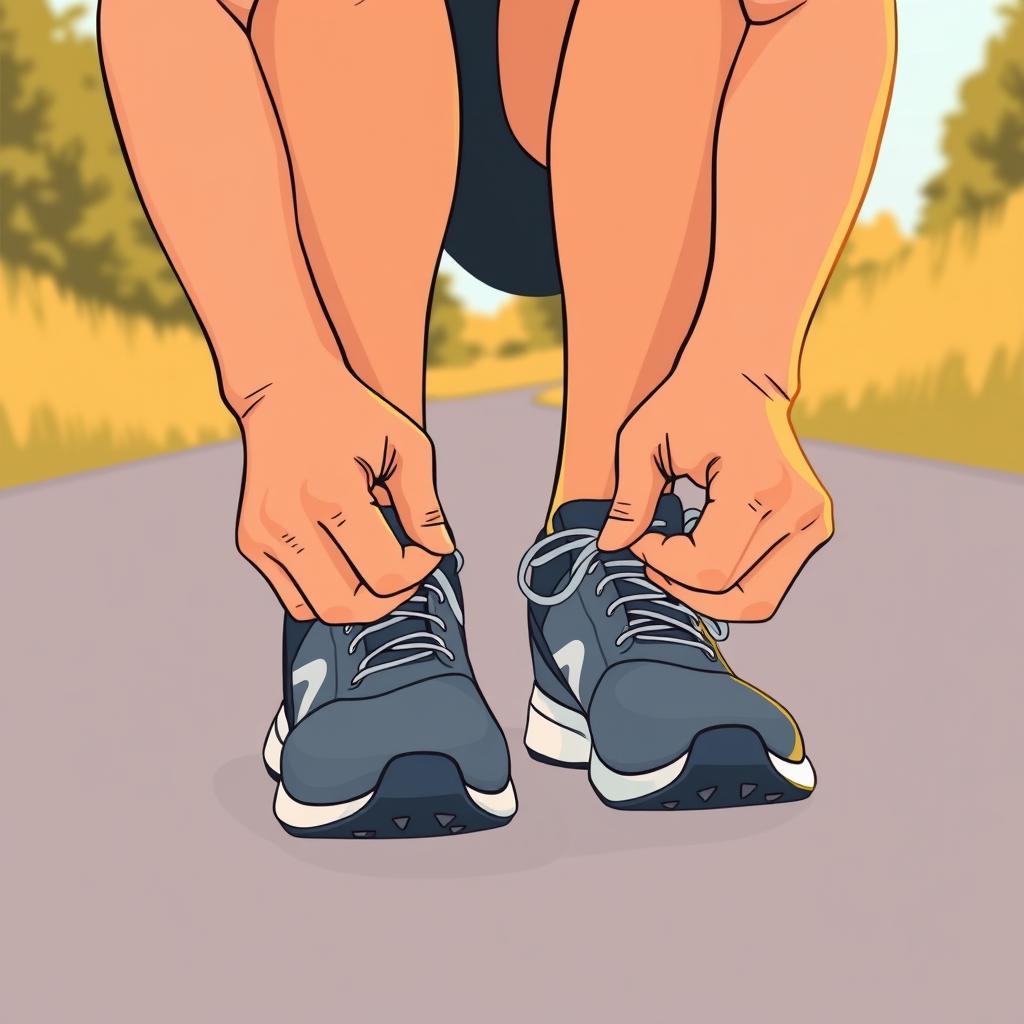
Step two: design the smallest possible first action. Do not stack “go for a 5K run.” Stack “put on running shoes.” That is it. The shoes go on, and then you decide. Most days, you will just go. The friction was never the run itself — it was the gap between the couch and the door.
Step three: add a sensory reward immediately after. Not a cheat meal. Something fast and real. A specific playlist you only hear while running. Checking a neighborhood leaderboard. Watching your route trace itself on a map. The reward needs to arrive within seconds of finishing, not hours later, because your brain links cause and effect based on immediacy.
Apps like Geowill use GPS-based treasure hunts to create exactly this kind of immediate, tangible reward after a run — turning your neighborhood into a game that refreshes the novelty your brain was craving in week three. That is not an accident. It is applied habit psychology built into the product design.
The 2-Day Rule That Prevents the Spiral 📅
Even with a solid habit stack, you will miss a day. Life happens. The mistake is letting one missed day become two, then five, then “I guess I’m not a runner.”
The 2-day rule is this: never miss twice in a row. One missed day is an interruption. Two missed days is the start of a new habit — the habit of not running.

On the day you know you will miss, do something symbolic and tiny instead. Walk around the block. Do five minutes of stretching while listening to your running playlist. This keeps the neural pathway active. Your brain still registers that the cue-behavior chain happened, even if the behavior was scaled down to almost nothing.
The streak is not the point. The identity is. Every tiny action is a vote for the version of you that runs. Even a one-minute walk counts as a vote.
The Real Reason You Will Stick This Time 🏁
Quitting after three weeks is not a character flaw. It is what happens when you rely on motivation and willpower to carry a habit that has not yet been wired into your brain.
Habit stacking works because it borrows the neural momentum of something already automatic. The anchor does the heavy lifting. Your only job is to keep the chain tight, protect the two-day rule, and engineer a reward that arrives fast enough for your brain to care.
The runners who stick are not the most disciplined people in the room. They are the ones who made running the path of least resistance, not the obstacle that requires maximum effort.
Build the stack. Make it small. Make the reward immediate. Show up for 66 days.
The habit will eventually run itself.
🏃 Make today’s run count
Set your target pace with our free calculator, then track every run with Geowill.