You opened a running app three weeks ago. You used it twice. It is still on your home screen, judging you.
You are not lazy. You are just bored. And science has a surprisingly specific explanation for why.
🧠 Why Your Brain Quits Before Your Legs Do
Running feels hard to sustain because the reward comes too late. You run today, but you only see real results in six to eight weeks. Your brain, wired for immediate feedback, does not find that deal attractive.
This is called temporal discounting. It means the further away a reward is, the less motivating it feels right now. A video game never makes this mistake. It gives you points, sounds, and level-ups within seconds of doing anything.
The fix is not more willpower. It is restructuring when the reward hits.
🎮 The Four Game Mechanics That Actually Work for Runners
Researchers at the University of Pennsylvania studied gamification in health apps over 24 weeks. Participants using game-based feedback exercised 30 percent more frequently than the control group. The key was not novelty. It was four specific mechanics working together.
The first is immediate feedback. You need to know your pace, effort, and progress the moment it happens, not at the end of the week. Hearing a voice coach tell you mid-run that you are ten seconds faster than last Tuesday changes how you feel about the next half mile.

The second is variable rewards. Fixed rewards get boring fast. Variable ones, like a surprise bonus or an unexpected achievement badge, trigger the same dopamine loop that makes slot machines so hard to put down. Healthy version, obviously.
The third is social stakes. Research from Cornell University found that people exercise significantly harder and longer when someone else can see their progress. It does not require competition. Just visibility is enough.
The fourth is clear, short-term quests. Vague goals like “run more this month” fail. Specific micro-goals like “collect three GPS checkpoints on tonight’s route” give your brain a concrete win to chase.
🗺️ How Treasure Hunts Fix the Boredom Problem Specifically
Here is a concrete example of all four mechanics combined into one run.
Imagine your city map has five collectible points scattered within two kilometers of your apartment. You do not know exactly what you will get when you reach each one. You are running with a friend on voice chat who is also hunting the same map. You have a fifteen-minute window before the points reset.
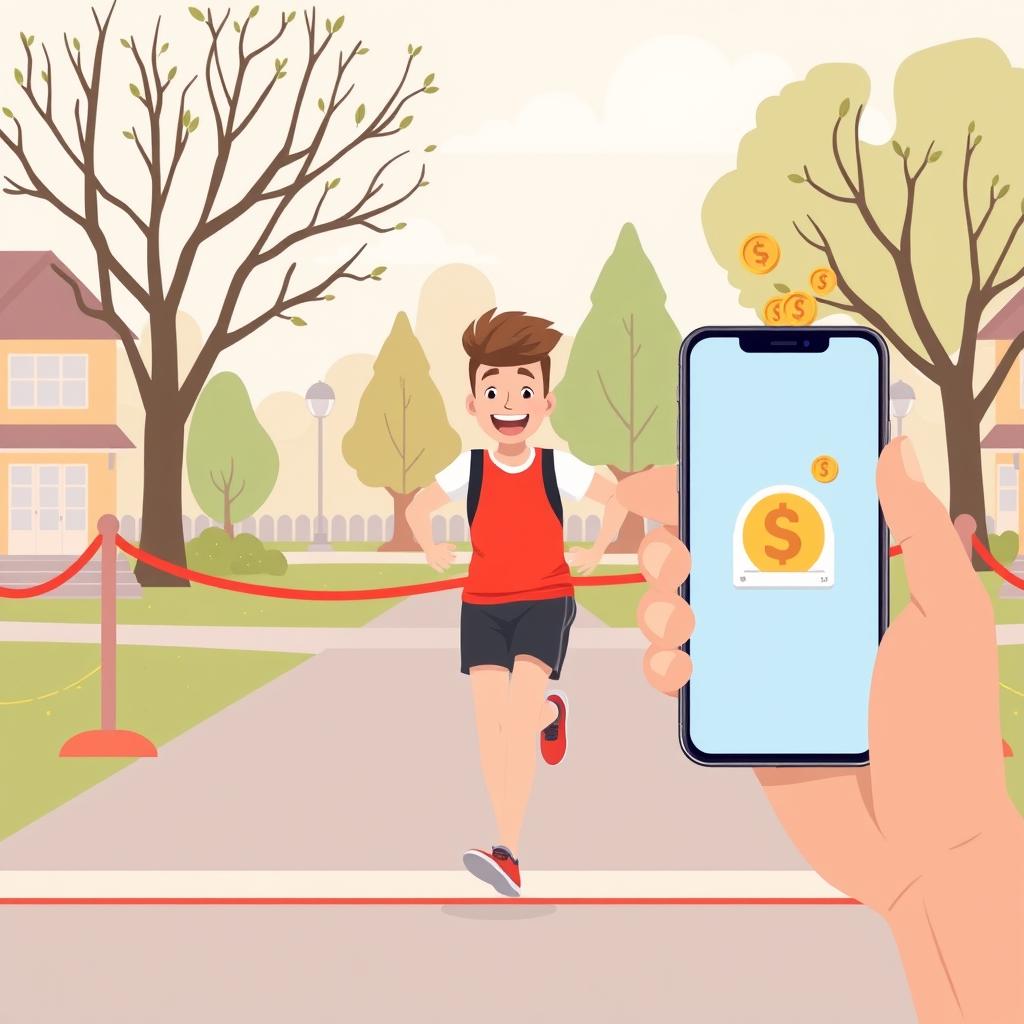
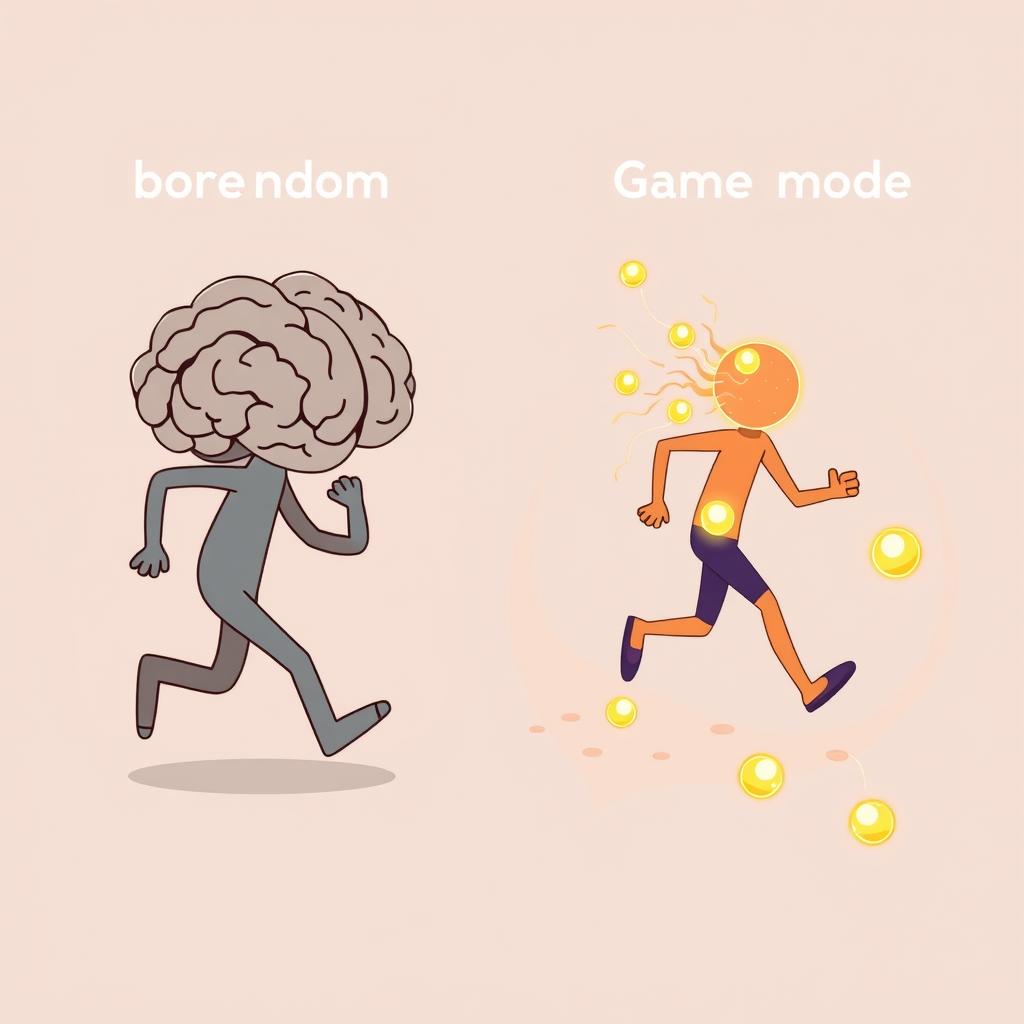
That scenario activates immediate feedback, variable rewards, social stakes, and a short-term quest simultaneously. Your brain stops calculating how tired your legs feel and starts calculating the fastest route to the next point.
This is exactly the design logic behind location-based running games. Geowill, a Korean running app expanding globally, uses GPS treasure hunts and real-time club voice chat to create this exact loop. Users are not running to get fit. They are running to get there first. Fitness is the side effect.

The psychologists call this a behavioral substitution. You replace the conscious decision to exercise with a game decision to play. The body does not know the difference.
⏱️ Building Your Own Gamified Running System (No App Required)
You can engineer most of these mechanics yourself starting tonight.
For immediate feedback, set your phone to announce your pace every five minutes out loud. Most free running apps let you configure audio cues. Hearing your number changes your effort level in real time.
For variable rewards, use a dice method. Before each run, roll a die or use a random number generator to pick your distance from a pre-made list: 3km, 5km, 4km, 6km, 3.5km, 7km. You never quite know what the session holds, and that uncertainty is the point.
For social stakes, share your route screenshot with one specific person after every run, not a group, just one. Research shows accountability to a single named person is more effective than posting to a crowd.
For short-term quests, pick a landmark before you leave the house. A specific bench, a bridge, a coffee shop three blocks past your usual turning point. Run to it. That destination-based thinking rewires how you experience the distance.
Combine all four in one week and track how many runs you complete versus a normal week. Most people see an immediate difference in follow-through.

🏅 Consistency Is a Design Problem, Not a Discipline Problem
Here is the reframe that changes everything. You have probably told yourself you need more motivation, more dedication, or a better schedule. Those things help marginally.
What actually moves the needle is reducing the psychological friction between the decision to run and a reward your brain can feel immediately.
A 2023 study in the Journal of Medical Internet Research found that runners using gamified apps were 40 percent more likely to hit their weekly distance goals after eight weeks compared to those using standard tracking apps. The workouts were identical. The experience around them was different.
You do not need to grind. You need a better game.
Start with one mechanic this week. Add a voice announcement cue, pick a surprise landmark, text one friend your finish time. Stack the next mechanic the following week. By week four, your runs have structure, feedback, stakes, and a reason to go out even when the couch is calling.
Gamifying your running routine is not about making fitness feel fake. It is about making it feel worth doing right now, not someday when results finally show up. Your brain responds to the game. Your body gets the result. That is the whole trick.
🏃 Make today’s run count
Set your target pace with our free calculator, then track every run with Geowill.