doimoigroup

[태그:] AI running coach

  • 10 Years of Running: How AI Coaching Changed My Marathon Training

    Ten years ago I finished my first marathon in 4 hours and 52 minutes. I cried at the finish line, ate an entire pizza, and told everyone who would listen that I was going to run a sub-4 the following year. That did not happen the following year. Or the year after that. For most of the next decade I plateaued somewhere between 4:10 and 4:25, cycling through the same training mistakes on loop, wondering why I wasn’t improving despite putting in the miles. Sound familiar?

    The thing nobody tells you about being an intermediate runner is that it is the loneliest place to be. Beginners have endless advice aimed at them. Elite runners have coaches. But if you have been running for three or four years, can comfortably knock out a half marathon on a weekend, and still can’t crack that target time, you are kind of on your own. Hiring a real running coach runs about 150 to 300 dollars a month. Premium app subscriptions stack up fast. And most generic training plans assume you’re either a complete beginner or already running 70 miles a week. None of them account for the fact that you had a terrible sleep Monday, your easy runs are actually not that easy, and your left knee starts complaining on anything over 16 kilometers.

    That is the exact gap that AI coaching started filling for me, and after two years of experimenting with it seriously, I want to break down specifically what changed and why.

    The Problem With Generic Training Plans 📋

    Most marathon training plans are built around a fictional average person. They assume you will hit every session, recover on schedule, and live somewhere flat with predictable weather. Hal Higdon’s Novice 2 plan, for example, has you running 5 days a week with a long run that increases by about 1.6 kilometers each week. It’s a solid framework, but it doesn’t know that you work shifts, that you live in a city with hills that add 20 percent more effort to every outdoor run, or that your easy pace is actually 10 to 15 beats per minute above your aerobic threshold because nobody taught you about heart rate zones until recently.

    The result is that a lot of intermediate runners spend months building volume without ever addressing the actual bottleneck in their performance. For me, that bottleneck turned out to be simple and embarrassing: I had been running my easy runs too fast for years. My so-called easy pace of 6 minutes per kilometer was still pushing me into zone 3, which meant I was accumulating fatigue without building the aerobic base that actually makes you faster. I only found this out when an AI coaching tool analyzed 14 weeks of my logged runs and flagged that my heart rate on recovery days averaged 158 beats per minute. For context, my true easy zone caps out at around 145.

    No generic plan would have caught that. A human coach would have, but I wasn’t paying for one.

    What AI Running Coaches Actually Do (And Don’t Do) 🤖

    Let’s be clear about what AI coaching is in 2024, because there’s a lot of hype and some legitimate skepticism worth taking seriously. AI coaching in running apps is not magic and it is not a replacement for a certified coach who watches you move, assesses your mechanics, and adjusts your plan in a real conversation.

    What it actually does well is pattern recognition across your own data at a scale and speed that would take a human coach hours. When you feed it consistent GPS data, heart rate readings, pace splits, elevation, and rest days, a good LLM-based coaching tool can identify trends you simply cannot see yourself. It can notice that your pace in the final 5 kilometers of your long runs has been slowing by an average of 45 seconds per kilometer over the last 6 weeks, which suggests you’re going out too fast or your fueling strategy needs work. It can flag that your Wednesday tempo runs consistently produce higher heart rate numbers than your Friday equivalents, possibly pointing to mid-week sleep debt.

    What it struggles with is nuance and accountability. It can tell you to run a 25-minute easy jog but it cannot tell whether the shin tightness you mentioned briefly in a text input three weeks ago is getting better or worse. It cannot read your body language when you are clearly overtired and pushing anyway. And the quality of the output is heavily dependent on the quality of the data you put in. If you forget to log your sleep, skip GPS tracking, or run with your watch inside your jacket, the coach is working with an incomplete picture.

    The sweet spot is using AI coaching as a consistent analytical layer that surfaces information you then apply with your own judgment.

    The Specific Changes That Actually Moved My Numbers 📉

    After two years of taking AI coaching seriously, here are the concrete adjustments that contributed to me finally running a 3:58 last spring.

    First, slowing down my easy runs. Once the pattern analysis flagged my heart rate problem, I dropped my easy pace from 6:00 per kilometer to 6:45 to 7:00. For about six weeks this felt humiliating. I was being overtaken by people walking their dogs. But my heart rate on those runs dropped to a genuine zone 2, and within two months my tempo run paces improved by about 15 seconds per kilometer without any increase in perceived effort. The aerobic base was actually building.

    Second, restructuring my weekly layout. My instinct had always been to cluster my hard days together because I thought I was making them count. The AI analysis showed a consistent performance dip in the second half of every week, suggesting I wasn’t recovering between quality sessions. Spreading the hard days further apart and adding a true rest day on Thursday instead of Sunday changed my energy levels noticeably within three weeks.

    Third, addressing my long run pacing. My AI coach flagged that I was running my long runs at about 80 percent of marathon goal pace, which is too fast for the aerobic adaptation you’re trying to trigger at that distance. Pulling back to 85 to 90 percent of goal pace and extending the distance by 15 minutes instead felt counterintuitive but the data supported it.

    None of these were revolutionary insights. A good human coach would have told me the same things. But I had never had a good human coach, and I had never been able to see these patterns in my own data because I didn’t know what to look for.

    Replacing Premium Subscriptions Without Losing Functionality 💸

    Here’s the part that matters practically if you’re trying to do this without spending a lot of money each month.

    For years I paid for a premium running analytics subscription that gave me detailed pace zone breakdowns, segment analysis, and monthly progress summaries. It cost around 8 dollars a month, which sounds low but adds up to nearly 100 dollars a year for a runner who is, at the end of the day, just a person who runs for fun and personal goals. When Strava increased its premium pricing, I started looking for alternatives seriously.

    The honest answer is that free tools have genuinely caught up for most of what intermediate runners actually need. Detailed pace zone analysis, elevation-adjusted splits, heart rate zone tracking, monthly and annual progress summaries, and AI-generated training suggestions based on your personal performance history are now available without paying a monthly fee.

    One app I’ve been using, Geowill, offers free analytics that cover all of those functions, plus an AI coaching layer that analyzes your pace history and generates personalized training suggestions. It also does something I genuinely enjoy and didn’t expect to care about: it auto-generates a 3D flyover video of your route after each run, which sounds gimmicky until you run somewhere beautiful and want to share it. But more practically, the free analytics are competitive with what I used to pay for.

    The point isn’t any specific tool. The point is that if you are paying a monthly subscription primarily for analytics features and you haven’t checked what free alternatives now offer, it is worth 30 minutes of your time to do that comparison honestly.

    Building the Habit That Makes the Coaching Work 🔄

    Data analysis and personalized training suggestions are only useful if you are consistent enough to generate meaningful data in the first place. This sounds obvious but it is the piece most people skip over when they talk about AI coaching.

    The minimum threshold for useful pattern recognition is roughly 8 to 10 weeks of regular, consistently logged runs. Before that point, the AI doesn’t have enough signal to distinguish your patterns from normal variation. A lot of runners try an AI coaching feature for two or three weeks, find the suggestions generic or slightly off, and give up. The suggestions are generic because the data is insufficient. Keep going.

    Practically, this means logging every run even when it goes badly, wearing your heart rate monitor consistently even when it feels annoying, and being honest in your notes about how a run actually felt rather than how you wanted it to feel. The more honest context you provide, the more accurate the analysis becomes.

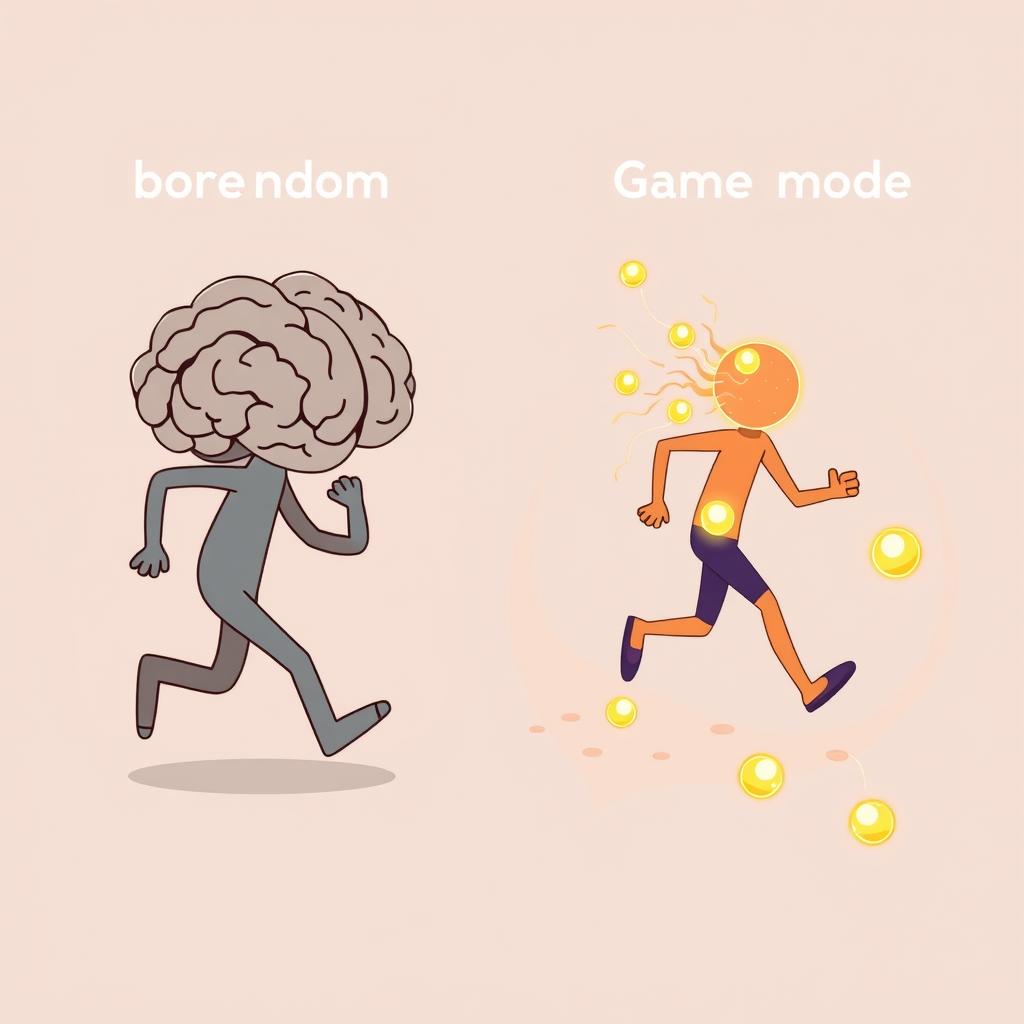
    One thing that genuinely helped my consistency was gamification. Leaderboards, streaks, and treasure-hunt style location challenges sound juvenile until you realize you have run 8 extra kilometers this month chasing a prize marker on a map. Motivation doesn’t need to be sophisticated to be effective. If a notification telling you there is a rare item three kilometers away gets you out the door on a cold Tuesday evening when you otherwise wouldn’t have gone, the method worked.

    The Real Lesson After 10 Years 🏅

    Running improvement is rarely about running more. For most intermediate runners, it is about running smarter, which means understanding what your body is actually doing during training rather than what you assume it is doing.

    The reason AI coaching made a difference for me after a decade of plateauing is not that the AI knew something magical. It’s that I finally had a consistent, honest record of my training analyzed by something that had no ego investment in the conclusions. It told me my easy runs weren’t easy. My hard days were too clustered. My long runs were too fast. I had heard vague versions of all of these suggestions before and ignored them because I couldn’t see the evidence clearly enough to believe them. Seeing the patterns visualized in my own data over 14 weeks of runs made them impossible to dismiss.

    If you’re an intermediate runner who has been following generic plans for a few years and wondering why your times aren’t moving, the answer is almost certainly in your data. You just need the right analytical layer to surface it. That layer is now free, which is honestly kind of remarkable. Use it.

  • How AI Running Coaches Help You Track 10 Years of Progress

    Ten years ago, you probably posted a throwback photo of yourself with the caption “ten year challenge” and laughed at how different you looked. But here is the thing nobody talks about: what if you could intentionally design the next ten years so that the future version of you is not just older, but measurably, provably stronger? That is exactly what serious runners are doing right now — and AI coaching tools are making it possible for absolute beginners to start that process today, with data that will actually mean something a decade from now.

    If you have ever started running, quit after three weeks, restarted, and then wondered why you feel like you are always at zero — this is for you.

    Why Ten Years Is the Right Frame for Running Progress 🗓️

    Most running apps and training plans are built around short cycles. Eight weeks to a 5K. Twelve weeks to a half marathon. This is useful for getting off the couch, but it accidentally trains you to think of running as a series of sprints rather than a lifelong practice. The result is that millions of people complete a race, lose their training structure, and drift away from running entirely.

    The ten-year frame flips this entirely. When researchers at the University of Copenhagen tracked recreational runners over a decade, they found that the runners who maintained the lowest injury rates and the most consistent improvements were not the ones who trained hardest in any given year — they were the ones who accumulated the most total years of low-to-moderate running. Longevity was the performance variable that mattered most.

    Practically, this means your goal for year one should not be a fast 5K time. It should be building a base that makes year two possible. A 30-minute easy run three times a week is more valuable over ten years than a brutal training block that leaves you injured and burnt out for six months.

    This sounds simple, but it requires tracking. You cannot manage what you cannot measure, and you cannot understand decade-level trends from memory alone.

    What AI Coaches Actually Do Differently Than a Timer App ⚡

    There is a meaningful difference between recording your runs and coaching you across them. A basic GPS app tells you your pace and distance. An AI coach does something more interesting: it identifies patterns across your history and uses those patterns to make forward-looking recommendations.

    Here is a concrete example. Say you have three months of running data. A good AI coaching system notices that your average pace on Tuesday runs is consistently 45 seconds per mile slower than your Saturday runs. A human looking at that data might assume you are lazier on Tuesdays. The AI cross-references the data differently — it notices your Tuesday runs happen after your strength training day, and that your heart rate on those runs is elevated even at slower paces. The recommendation it generates is not “run faster on Tuesdays.” It is “treat Tuesdays as a true recovery day, drop the pace another 30 seconds, and stop trying to hit the same effort as Saturdays.”

    That kind of insight is impossible to generate from a single run. It emerges from accumulated data. The more data you feed it, the more specific and useful the recommendations become. After a year, the AI can identify seasonal patterns — maybe you run stronger in October than March, which might correlate with temperature, or daylight, or your work schedule. After five years, it can spot longer physiological trends that a single training cycle would completely obscure.

    This is why starting today matters so much. Every run you log right now is a data point that makes your coaching smarter in 2027, 2030, and 2035. The runner who starts logging tomorrow is not just one day behind — they are one data point behind, every single day.

    The Metrics That Actually Compound Over Time 📊

    Not all running metrics are equally useful for long-term tracking. Some are great for daily feedback but tell you almost nothing about progress over years. Here is how to think about which numbers to care about.

    Pace at a given heart rate is the single most valuable long-term metric most runners ignore. Raw pace tells you how fast you ran. Pace at a given heart rate tells you how efficiently your cardiovascular system is working. As you become fitter over months and years, your pace at the same heart rate will improve — you will be running faster with the same physiological effort. If you only track pace, you might feel like you plateaued. If you track pace relative to heart rate, you will see consistent improvement even in years where your race times barely change.

    Elevation gain tolerance is underrated. Tracking how your heart rate and pace respond to hills over years shows you something raw flat-road data cannot: your true aerobic development. A beginner might see their heart rate spike to 175 bpm on a modest hill. Three years later, the same hill at the same pace might only push them to 155 bpm. That 20-beat difference represents a profound physiological change that took years to build and would be invisible without consistent tracking.

    Monthly volume trends over years matter more than weekly plans. Most runners measure volume week to week. The more useful view is annual: how many total kilometers did you run in 2024 versus 2025? A 10 to 15 percent annual increase in total volume, sustained over a decade, produces a dramatically different runner than someone who jumps from 50K months to 100K months and back again.

    Injury gap tracking is the one nobody thinks to log. Every time you take a week or more off due to injury or pain, note it. Over ten years, this creates a map of your structural vulnerabilities — patterns in when you get hurt that can inform how you train in the future. Runners who ignore this end up repeating the same injuries on five-year cycles.

    How to Actually Set Up a Ten-Year Running Tracking System Today 🛠️

    You do not need expensive software or a professional coach to build this. You need consistency and the right setup from day one.

    Start with a single source of truth for your data. Pick one app and stick with it. The biggest mistake long-term trackers make is switching platforms and losing years of historical data, or splitting their data between two or three apps that do not talk to each other. Whatever you choose, confirm it lets you export your raw data as a GPX or CSV file. This is your insurance policy — if the app shuts down in year seven, you keep your history.

    Log more than just the numbers. Every ten or fifteen runs, add a short text note. How did your legs feel? What was the weather? Were you stressed about work? This qualitative layer becomes extraordinarily valuable over years. When you look back at a year of data and see that your worst running months correlate with a particular note pattern, you have information that pure metrics cannot provide.

    Set annual benchmarks, not just race goals. Pick one standardized run you do twice a year — the exact same route, ideally with similar weather conditions — and treat it as your personal benchmark test. A simple 5K time trial on the same course, done every April and October, gives you a decade-long performance curve that is far more meaningful than scattered race results on different courses.

    Use AI coaching features not as a daily instruction set but as a quarterly review tool. Sit down every three months, look at your data holistically, and ask the AI coach what your trends suggest. This prevents the trap of over-coaching day to day while still using the system’s pattern recognition for what it does best.

    Apps like Geowill are genuinely useful here because they bundle free pace and heart rate analytics — including monthly and annual progress views — with an AI coach that analyzes your actual data rather than giving generic advice. For someone building a ten-year tracking habit on a budget, having Strava-premium-level analytics without a subscription removes one of the main reasons people abandon long-term tracking.

    The Psychology of Long-Term Progress: Why Gamification Actually Helps 🎮

    Here is something sports psychologists have documented clearly: humans are bad at staying motivated by abstract long-term goals. “I want to be a strong runner in ten years” is real to your prefrontal cortex but invisible to the emotional brain systems that drive daily behavior. This is why even deeply motivated runners quit — the daily action and the decade-level reward are too far apart in time.

    Gamification bridges this gap by manufacturing short-term feedback loops that keep the emotional brain engaged. This is not about turning running into a trivial game. It is about applying well-understood behavioral science to a habit that is otherwise brutally front-loaded with effort and back-loaded with reward.

    The most effective gamification for long-term progress has three qualities. It must give immediate feedback — you need to feel something today, not next month. It must have progressive difficulty — the challenges should get harder as you get better, or they stop being engaging. And it must connect individual actions to a larger narrative — each run should feel like a chapter in a longer story, not an isolated event.

    Location-based features like treasure hunts, neighborhood leaderboards, and streak systems all satisfy the first two criteria well. The third — connecting runs to a longer narrative — is where consistent data tracking becomes essential. When you can literally see your ten-month pace trend on a graph and watch it move, the abstract goal becomes concrete. The graph is your story.

    What Your Future Self Will Thank You For 🚀

    Let me be direct about the math here. A runner who starts logging consistently at 25 and maintains the habit will have, at 35, a dataset that no amount of money can buy retroactively. Ten years of pace, heart rate, elevation, weather, and note data is a personalized physiological record that a professional sports scientist would find genuinely interesting. More practically, it means a 35-year-old runner who gets a nagging injury can look back and say with confidence: “The last time my right knee bothered me, it happened after three consecutive weeks of over 50K. I am at 48K right now. I need to back off.”

    That level of self-knowledge is not dramatic. It is not the stuff of inspirational running montages. But it is the thing that keeps people running at 45 and 55 while most of their peers have given it up.

    The ten-year running challenge is not about becoming an elite athlete. It is about becoming someone who is measurably, documentably different from who they are today — and having the receipts to prove it. Start logging today. Not because the data will make you faster this week, but because the you in 2035 deserves to know exactly how far you have come.